Building a glass processing line isn't just about acquiring the right machines. A line with incorrectly arranged or mismatched machines won't deliver the expected performance, even if the individual machines are excellent. This article discusses how to plan the line as a whole.

Basic rule: the sequence of operations cannot be undone.

In glass processing, the sequence is physical, not a matter of preference. The most critical constraint is this: No mechanical processing can be performed on the glass after tempering. Drilling, cutting, or edge-processing tempered glass will shatter it.

Therefore, the correct order is:

  1. Cut — adjusted to plate size
  2. Edge finishing (grinding/polishing) — microcracks are repaired
  3. Drilling / countersinking / shaped machining — all mechanical processes
  4. Washing — the surface is cleaned
  5. Tempering or insulating glass bonding — final process

Where should the washing take place?

This is the most debated question, and the answer is "it depends" — because washing is common in most cases. twice It is done.

Pre-treatment washing: Cutting fluid and glass dust from the cutting process act as abrasives during grinding and drilling. Some manufacturers therefore apply a pre-wash before grinding.

Pre-process washing: This is mandatory. The glass used in insulating glass assembly or tempering must be clean and dry. Even a micron-sized particle remaining on the surface means a permanent defect in the insulating glass unit.

For small to medium-sized production lines, a single washing machine (after drilling and run-in, just before the process) is often sufficient.

Line speed balancing — the most common mistake.

The capacity of a line, It is the capacity of its slowest unit. This sounds obvious, but in practice it's constantly violated.

Typical scenario: a business buys a high-speed washing machine, but the break-in unit operates at half that speed. As a result, the washing machine spends half its time waiting; half the money paid goes unused.

How is it calculated?

Each unit linear meters/minute or plate/clock Subtract the actual capacity in terms of your glass measurement — not the catalog value. The lowest value is the capacity of your line.

The rule is simple when investing: First, fix the bottleneck. Making an already fast unit even faster won't achieve anything.

Is a buffer stock necessary?

A small waiting area between units increases the flexibility of the line. When one unit has a brief stop (tool change, adjustment), the others do not stop.

However, buffers take up space and add handling. In vertical lines, buffers are resolved with vertical storage carts and take up much less space than in horizontal lines.

Phased investing: where to start?

Installing the entire line at once is not realistic for most businesses. Here's a suggested setup:

Step 1 — Edge finishing. If you are producing tempered or insulated glass, grinding is already mandatory and it is the machine that has the most direct impact on waste. Break-in machines.

Step 2 — Washing. Product quality complaints (fogging, bubbles, stains) are prioritized here. Washing machines.

Step 3 — Drilling. If your drilling volume is increasing and you are outsourcing these jobs, a drilling machine will save you both cost and time. Drilling machines.

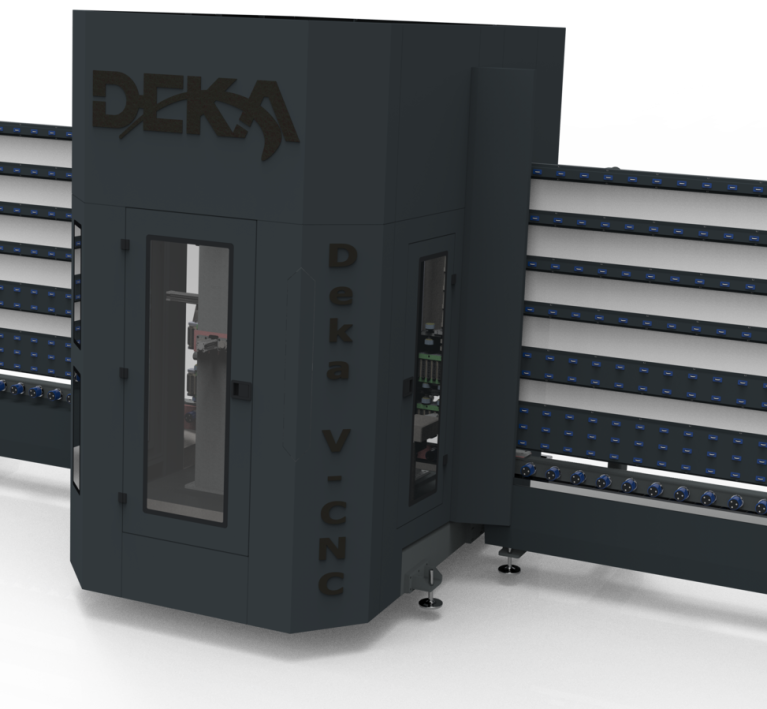
Step 4 — CNC machining center. This becomes more common in jobs requiring multiple processes (drilling + die-cutting + edging) on a single sheet of metal. CNC machining centers.

The advantage of the vertical line

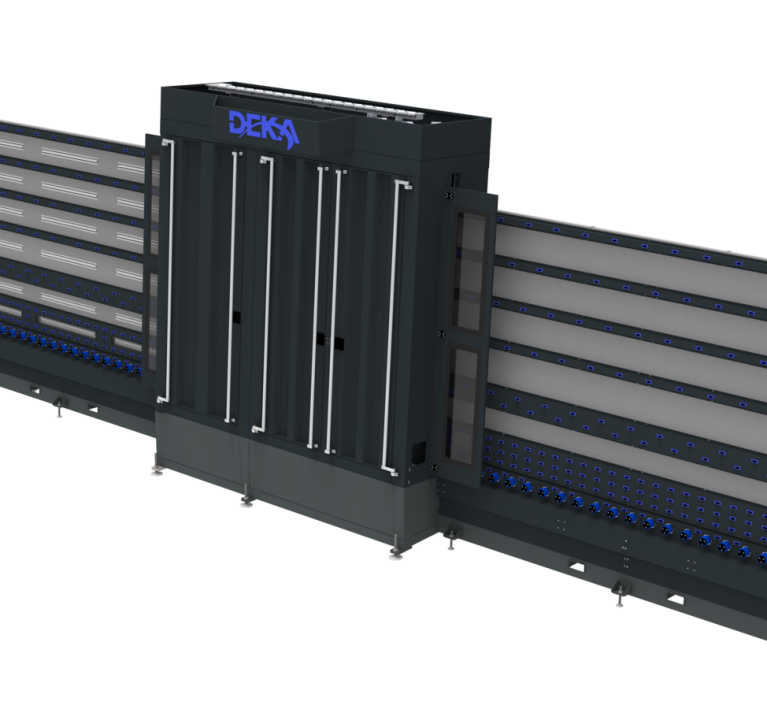
Vertical units can be connected directly to each other; glass units are transported vertically between them, eliminating the need for a turning step. This saves space and reduces waste during handling.

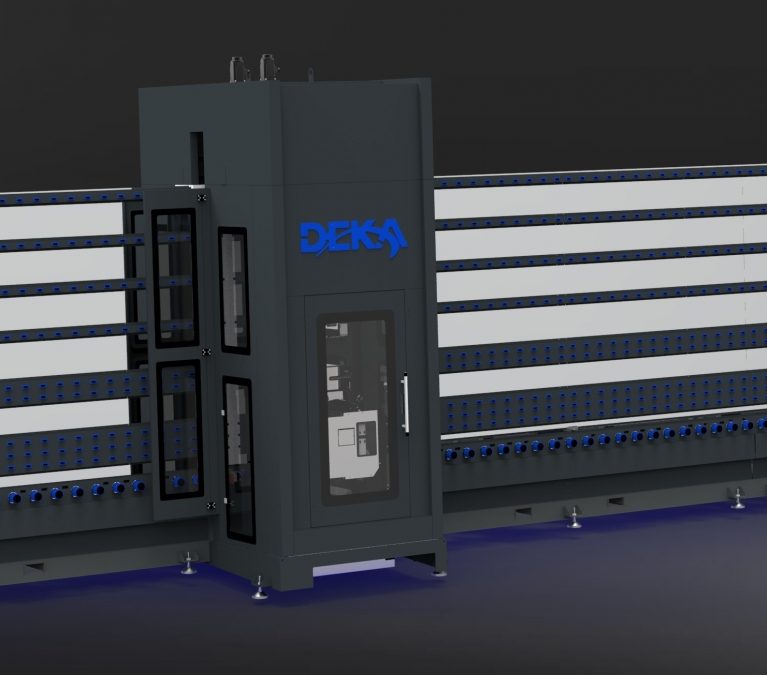
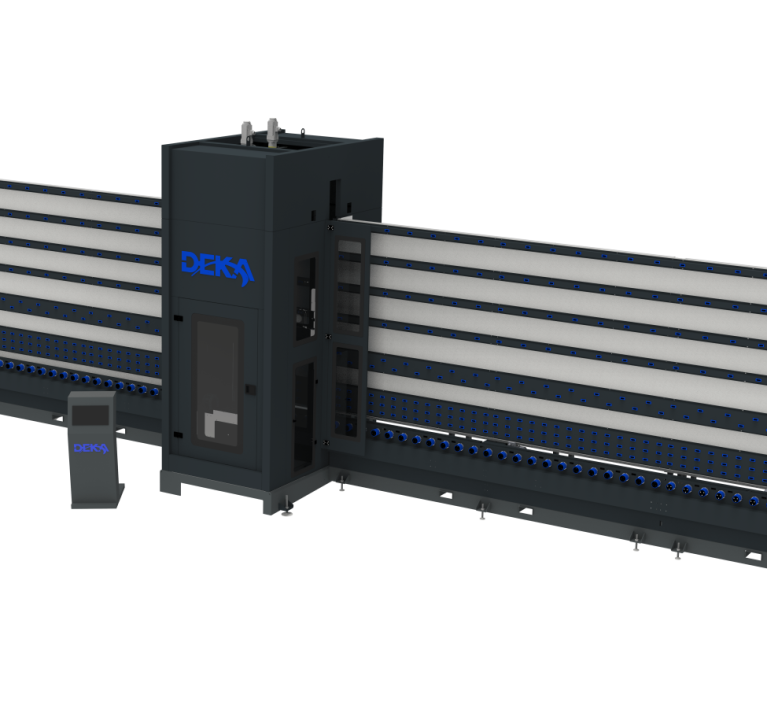
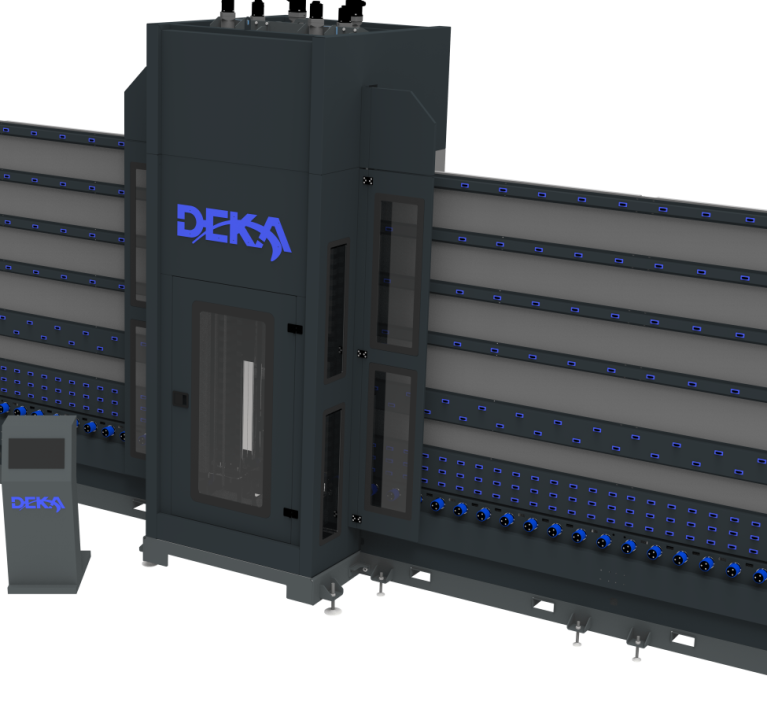
For example VGWM The washing machine can operate independently or be used inline on the same line with DKDT break-in, DD6 drilling, and FSR CNC machining units.

Data you need to gather before planning.

  • Total square meters and number of panels processed per month.
  • Largest and smallest glass size
  • Glass thickness distribution (how much of each thickness)
  • Glass types: plain / Low-E / laminated ratio
  • Perforated work rate
  • The actual capacity of the existing units
  • Available space in the workshop (length × width)

This data makes it possible to create a route plan. Share your current phone number with us. — Let's evaluate the bottleneck analysis and investment ranking together.