 Post by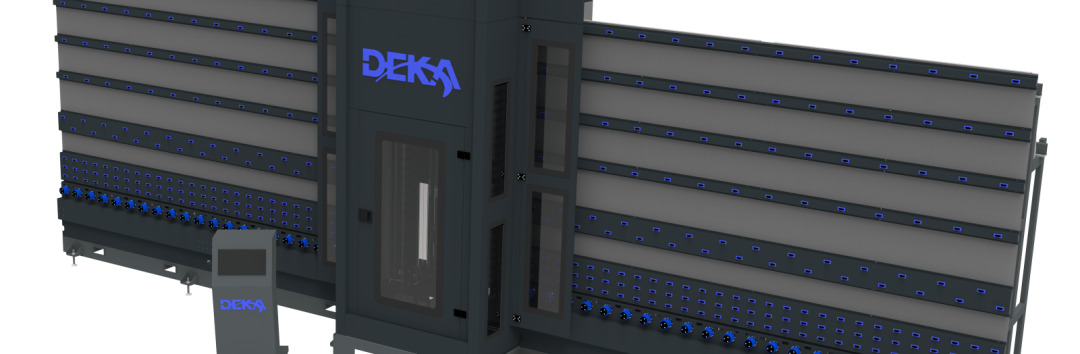
When comparing break-in machine offers, the most confusing technical specification is the number of shafts. The answer to the question "Should I get an 8-shaft or a 12-shaft?" is not in the price, what your production requires hidden.
What is the purpose of a shaft?
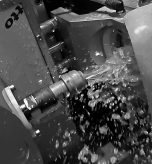
In a grinding machine, each spindle carries an abrasive stone. As the glass passes in front of these stones, its edge is gradually processed: the first stones are rough and remove material, the later ones are fine and smooth the surface.
This is similar to sanding wood. You can't go directly from coarse sanding to a polished surface; you can't skip the intermediate stages. The same is true for glass edges. Therefore... Number of miles = number of stagesis.
Basic equation
These three are interconnected; if you change one, you compromise the others:
Edge quality ↔ Number of spindles ↔ Line speed
It's possible to achieve a bright edge with a low-spindle machine — but you need to pass the glass through very slowly, because each stone requires more work. If you want the same quality at high speed, you need more spindles, i.e., more shafts.
How many miles, and for what purpose?
4-6 miles
It is sufficient for deburring and smooth finishing; the edge remains matte.
Suitable for whom: Manufacturers that only supply insulated glass and tempering lines. Since the edge will remain within the unit, gloss is unnecessary. Paying extra for mileage in this segment is a wasted investment.
8-10 miles
It completes the transition from rough grinding to polishing at a reasonable pace. It is the equilibrium point for most mixed production processes.
Suitable for whom: Workshops that produce both insulated glass and shower/furniture glass, with a varied product mix.
12 miles and above
It produces a bright edge at high speed. Since each stage is a short process, the life of the stone is also extended.
Suitable for whom: Businesses that primarily produce high-volume products with visible edges (shower enclosures, railings, display windows).
Calculate your own needs.
1. What percentage of your products show edges? If the is below, a strategy of using a low-spindle machine + slow processing of visible-edge jobs makes sense. If it's above , a high-spindle machine will pay for itself.
2. How many linear meters of edging do you finish per day? Not square meters, linear meter It is important — because the grinding is done along the edge. The perimeter of a 1x2 m plate is 6 linear meters.
3. What is the speed of the other units on the line? If your break-in machine can process 4 meters per minute but your washing unit only feeds 2 meters, then the money you're paying for the extra mileage is being wasted. You can read about line balancing here..
Things that might be more important than mileage
- Unadjusted thickness transition: If you're working with mixed thicknesses, a machine that stops at every pass is slow, even at 12 miles per hour. The automatic glass tracking system eliminates these stops.
- Ease of stone replacement: If it's a procedure done a few times a week, the annual total is large.
- Water circulation and filtration: Dirty water clogs the stone, reduces surface quality, and shortens its lifespan.
- Corner/radius characteristic: It eliminates the need to go to a separate station.
Practical advice
If your product mix changes over time, focus on the mid-range segment (8-10 million) and uneven thickness transition A single machine is usually the most balanced choice. An overly specialized machine will be unusable when your production direction changes.
Glass grinding and polishing machines You can get detailed information about it., DKDT series you can review or by sharing your production data Together you can determine the correct configuration.