 Post by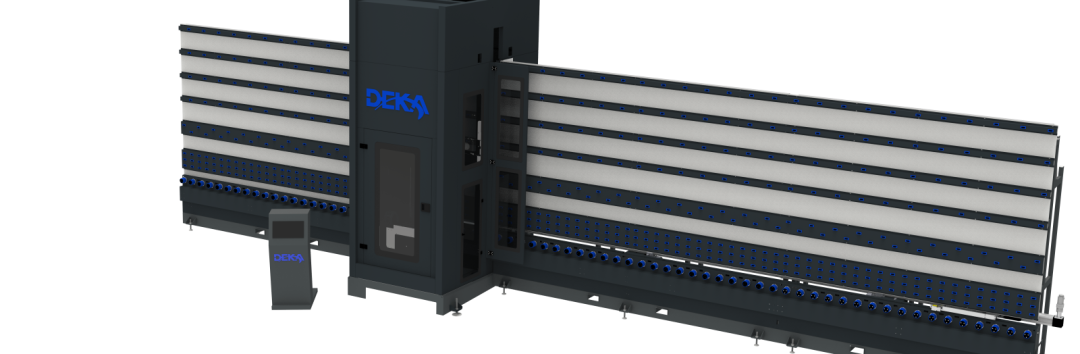
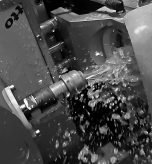
A countersink is a cone-shaped widening of the hole opening. Its purpose is to allow the head of a countersunk screw or fastener to meet the glass surface. in the same line The goal is to ensure it stays.
Why is it necessary?
In a flat hole, the screw head protrudes from the glass surface. This has three consequences:
- Aesthetic: Overhanging shower heads are unacceptable, especially in visible applications such as shower enclosures and railings.
- Security: The protrusion creates a risk of tripping and injury at entry points.
- Mechanical: The countersink allows the fastener to transfer the load to the glass surface over a wider area. Distributed load instead of point load reduces stress concentration in the glass.
The third point is the least known but most important. Glass is a brittle material; it will crack under point load.
Where is it standard?
- Shower cabin: Hinge and retaining connectors
- Glass railing: Point holder (spider) connections
- Point-connected facade: Ball joint systems
- Glass door: Lock and hinge assembly
- Furniture glass: Feet and connecting elements
Countersink geometry
Two values are determinants:
Angle. The connection element must match the head angle. A mismatched angle means the head only contacts along one circle — that is, again, a point load.
Depth. The head should be fully recessed, but the countersink should not consume too much of the glass thickness. An excessively deep countersink thins the glass section at that point and creates a weak point.
These two values the same in every piece It determines the assembly quality. This repeatability cannot be achieved with manual countersinking; in CNC controlled machines, it is defined in the recipe.
One-sided or two-sided?
A countersink is made on the side of the glass that will be visible. In applications where both sides are visible (glass railings, partitions) double-sided countersink It is necessary that the hole is narrow in the middle and wide at both ends.
Common mistakes
1. Trying to countersink the metal after tempering. It's impossible; the glass would shatter. All mechanical processes, including countersinking. before tempering It must end.
2. Opening the countersink too close to the edge of the window. Because countersinking widens the hole, the edge spacing calculation differs from that of a flat hole — the countersink... wide diameter It should be calculated based on that.
3. Choosing the wrong angle. Confirm the head angle with your fastener supplier; don't proceed by assumption.
4. Squeeze the fastener directly onto the glass. Even if the countersunk is correctly opened, an elastic intermediate element (gasket, nylon ring) must always be inserted between the metal and the glass. Direct metal-glass contact creates point stress.
What is required on the machine side?
Countersinking is a separate capability of a drilling machine. The machine must be able to carry the countersinking tool and manage the drill-countersinking transition. In machines with automatic tool changers, this transition is done without operator intervention. DD6‘The 6+6 turret system in [location] exists for this purpose.
If different fasteners require different countersink angles, the number of tools used directly affects your production speed.
Glass drilling machines You can get detailed information about it or by sharing the fasteners you used You can determine the appropriate team configuration together.