 Post by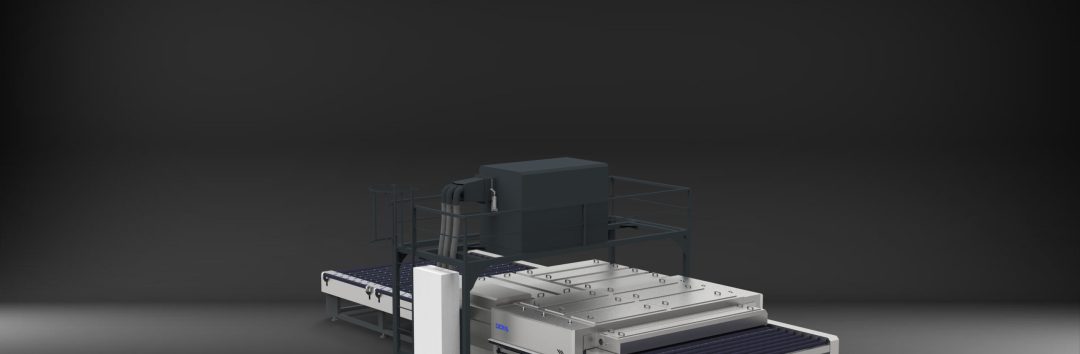
Low-E (low emission) glass has a very thin metallic coating on its surface that provides heat insulation. This coating determines the thermal performance of the glass — and damage to it during cleaning renders the product unusable.
Two types of Low-E, two different behaviors.
Hard-coated (pyrolytic)
The coating is applied while the glass is still hot during glass production and chemically integrates with the surface. It is durable; it can be processed with standard washing parameters, even tempered, and stored on its own.
Soft-coated magnetron
The coating is applied later in a vacuum environment. It has higher thermal performance, however. mechanically very sensitive. Using the wrong brush, excessive pressure, or dirty water can leave scratches that are barely visible to the naked eye but become apparent in sunlight after installation.
In practice, almost all problems occur with soft-coated glass.
1. The brush pressure should be adjustable.
A standard washer operates with a constant brush pressure optimized for normal float glass. This pressure is excessive for soft coatings.
If you are going to process Low-E, the machine brush pressure should be adjustable This is a fundamental requirement. Brush stiffness should also be chosen to suit the coating. This is not a feature that can be added later — it should be inquired about during the purchase process.
2. Water quality is often overlooked.
The most overlooked factor determining washing quality is water.
Hard water Once dry, it leaves a limescale stain on the glass. If this stain remains on the inner surface of the double-glazed unit, it cannot be cleaned again — that surface is inaccessible once the unit is switched off.
Dirty recirculating water But it does something even worse: the glass dust particles inside scratch the coating along with the brushes. So the water stops being a cleaner and turns into an abrasive.
Practical rule: final rinse demineralized (deionized) water This should be done properly, the circulating water should be filtered and changed regularly.
Why is step-by-step washing important?
In a machine operating with a single brush group, the dirt removed by the first brush is spread across the rest of the glass by the same brush.
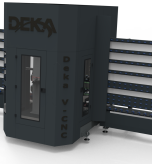
In a hierarchical structure, the work is divided: pre-wash It removes coarse dirt and glass dust., main washing It cleans the surface., rinse It removes detergent and residue traces. VGWM The three pairs of brushes in the series differentiate these three levels.
4. Coating stripping (edge deletion) is a separate process.
If soft-coated glass is to be used in a double-glazed unit, the coating must be removed along the edge. The reason is that the bonding putty does not adhere to the metallic coating in the same way it adheres to the glass. If the coating remains, separation at the edge and moisture ingress will occur over the years.
This process is not part of the washing machine's function; it requires a separate edge deletion unit. It should be considered as a separate step in production planning.
5. Storage and waiting time
If soft-coated glass is left in a humid environment for a long time, oxidation will begin in the coating. Therefore, these glasses are generally... within a limited time after being coated It must be converted into an insulated glass unit. The washed glass must also move on to the next process without delay.
Checklist
- Is the brush pressure of the machine adjustable?
- Is the brush stiffness suitable for the coating?
- Is the final rinse done with demineralized water?
- Is the circulating water filtered and changed regularly?
- Is the wash cycle stepped (pre-wash / wash / rinse)?
- Does the glass really come out dry after drying?
- Is edge deletion planned for soft-coated glass?
Window cleaning machines You can get detailed information about it or You can contact us for configuration suitable for your Low-E production..