 Post by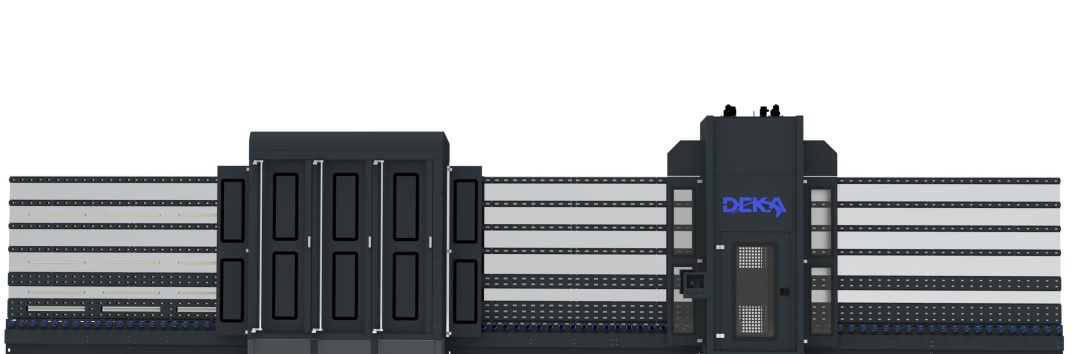
In the glass industry, the term "grinding" encompasses a very broad range of processes and is one of the most frequently misunderstood terms when ordering. A customer says "I want a ground finish," but the manufacturer does a smooth ground finish, while the customer expects a polished edge. This article clarifies the terminology.
What is break-in?
Grinding is the process of smoothing the sharp, micro-cracked edge of glass after cutting using abrasive stones, making it smooth, safe, and durable. The purpose can be summarized in three main points: security (removal of sharpness), durability (repair of microcracks) and aesthetic (for products where the edge will remain visible).
Types of break-in/wash-in
Deburring (seaming / arrissing)
The most basic process. Only the sharpness of the edge is removed; the edge is still matte and not perfectly smooth. The aim is safety and fracture resistance, not aesthetics.
Where it is used: Insulating glass units and tempering lines. Nothing more is needed as the edge will not be visible. This is what happens to the glass going into tempering. minimum It is a necessity.
Straight break-in
The edge is smoothed to a flat surface. A vertical, smooth band forms along the thickness of the glass. The edge remains matte (frosted appearance).
Where it is used: Shelf glass, door glass, applications where the edge is within the frame but high-quality workmanship is expected.
Bright polishing
After a simple grinding process, the edge is polished with progressively finer-grained stones. The edge becomes transparent and shiny, taking on the same appearance as glass itself.
Where it is used: Shower enclosures, table glass, display cases, glass railings — anywhere the edge is directly visible.
C-shaped edge (semi-circle / pencil edge)
The edge is not straight, but processed in a semi-circular cross-section. When viewed from the side, the edge is rounded.
Where it is used: Table glass, coffee table glass, furniture glass. It provides both aesthetics and touch safety.
Profile grinding (beveling / shaped edge)
A specific angle or profile is given to the edge. Beveling is the most common example: the edge is carved at an angle such as 45° to create a decorative surface that refracts light.
Where it is used: Mirrors, decorative glass, classic furniture.
Corner break and radius
Not the edge, corner This is the process. Sharp edges are broken off or rounded to a specific radius. It reduces the risk of injury during handling and prevents breakage starting from the corner.
Which one do I need? Decision table
| APPLICATION | The necessary action |
|---|---|
| Insulating glass unit | Deburring |
| Before tempering | Deburring (minimum) |
| Shower cabin | Bright polishing |
| Table/coffee table glass | C-ring or bright rimming |
| Glass railing | Bright break-in + radius |
| Mirror / decorative | Profile beveling (edging) |
What does that mean on the machine side?
All these processes are carried out in the same machine, with stones of different particle sizes. In the machine... number of spindles, This determines how many steps the edge has been machined.
For deburring and smooth grinding, machines with fewer spindles are sufficient. If a bright finish is desired, more stages—that is, more spindles—are required from coarse to fine grinding. The alternative is to reduce the line speed.
For details: glass grinding and polishing machines And DKDT series.
Please clarify when placing your order.
When ordering from your glassblower, simply saying "beveled" isn't enough. Specify whether the edges will be visible, and if so, whether they will be matte or glossy, and whether the corners will be chipped. These three pieces of information will prevent most misunderstandings.